"The way we spend our hours defines our lives...TED speakers explore how we make choices about time, meaning and attention in a world of infinite options."
Read More"The way we spend our hours defines our lives...TED speakers explore how we make choices about time, meaning and attention in a world of infinite options."
Read More"A second glance can change everything...TED speakers will make you think twice about robots, history lessons and even wine bottles."
Read More"Have you ever fallen asleep in school or during a work meeting? Maybe you felt your eyes glaze over as your boss or a teacher droned on and on about a topic that had no relevance to you. What's missing from these classrooms and conference rooms is engagement: A state of being absorbed, alert, and eager to learn. This week, psychologist and neuroscientist Mary Helen Immordino-Yang explores why so many of us feel apathetic at school and at work, and how to cultivate the magic of engagement."
Read More"William Ury, cofounder of Harvard’s Program on Negotiation, is one of the world’s best-known experts on negotiation. He is coauthor of Getting to Yes, the all-time best selling negotiation book in the world. He is also the author of Getting Past No: Negotiating in Difficult Situations and Possible: How We Survive (and Thrive) in an Age of Conflict."
Read More"The host of Hidden Brain on NPR discusses the lies we all tell ourselves and the role they play in easing everyday life."
Read More"When should you stay the course in life, and when should you shift with changing tides? This [episode explores] case studies from the world of business to explore the science of inflection points — changes that dramatically transform the course of events. Researcher Rita McGrath of Columbia University explains why we fail to see impending moments of upheaval, and what we can do to be more adept at spotting them."
Read More"We encounter friction every day — in all its forms — as we brush our teeth, go for a jog, argue with a friend. This hour, TED speakers explore how this force can be dialed up or down to improve our lives."
Read More"Ellen Langer is a psychologist at Harvard who studies the mind-body connection. She’s published some of the most remarkable scientific findings [on the interaction of our minds and bodies]. Can we really improve our physical health by changing our mind?"
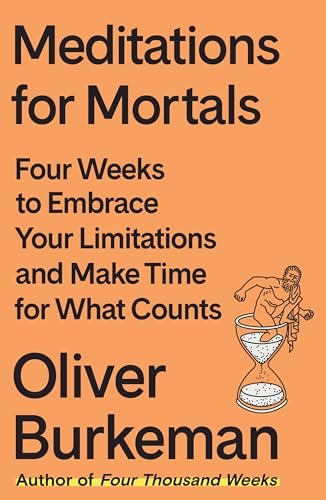
Read More"Addressing the fundamental questions about how to live, ["Meditations for Mortals"] offers a powerful new way to take action on what counts: a guiding philosophy of life Oliver Burkeman calls ‘imperfectionism’. How can we embrace our non-negotiable limitations? Or make good decisions when there’s always too much to do? What if purposeful productivity were often about letting things happen, not making them happen? Reflecting on ideas drawn from philosophy, religion, literature, psychology, and self-help, Burkeman explores practical tools and shifts in perspective. The result is a bracing challenge to much familiar advice, and a profound yet entertaining crash course in living more fully."
Read More"In an era when every competitor is racing to add more features, channels, data, and spend, the real differentiator is the courage to remove. Subtraction is neither austerity nor minimalism; it’s strategic design. By carving away the non-essential, leaders create the white space where breakthroughs can grow and position their organizations to be first off-the-blocks when the rebound arrives."
Read More"It’s the best way to anticipate the many secondary effects of change in an interconnected world."
Read More"...are architects of group performance who bring people together optimally. [They] integrate diverse expertise, promote equitable contributions, and cultivate trust. In doing so they generate collective intelligence, or a group’s ability to reason, innovate, and solve problems."
Read More"They assume the size of the pie is fixed—and miss opportunities to create value." [KJ: For an excellent companion perspective from a former hostage negotiator, see Scott Walker's HBR article delineating his approaches to effective negotiation.]
Read More"Timely input, candid feedback, and robust debate are as vital for ensuring innovation as for preventing strategic blunders. Leaders who create the kinds of teams that practice these ways of interacting will be poised to outperform those who do not. Ultimately, psychological safety is about changing the expectations for how we work together to successfully navigate the storms ahead."
Read More"When leaders constantly push forward without pausing to recognize progress, they risk burnout, diminished resilience, and poorer judgment...By making progress visible, separating real from self-imposed urgency, and redefining what celebration looks like, leaders can strengthen confidence, sustain motivation, and stay grounded in what’s working—even amid relentless demands."
Read More"...Many employees don’t feel that they matter to their employers, bosses, and colleagues. Mattering—a mainstay concept in psychology—is the experience of feeling significant to those around us because we feel valued and know that we add value...[What should leaders do?] First, leaders need to truly see and hear team members during daily interactions. They must also regularly affirm their people’s significance. And finally, senior leaders need to scale these skills up to the organizational level so that mattering becomes a cultural norm. These behaviors may seem like common sense, but they’ve ceased to be common practice in a world of brief digital communications and condescension toward soft skills, and they’re well worth relearning."
Read More"At some point, everybody dreams of quitting their job to do something completely different. Sometimes, those dreams fall under pure fantasy. At other times, they’re grounded in reality and hope. In the spirit of such hope, we found seven people whose major career changes worked out astoundingly well — both financially and emotionally."
Read More"Many important tasks can be done by other people. Focus on what you can do a lot better than anyone else."
Read More“Whether you are an employee or employer, it is a better investment to increase happiness at work and in life, rather than simply trying to increase measures of success.”
Read More1: The Chain of Events. "We tend to think of tragedies as a single terrible moment, rather than the result of multiple bad decisions. Can this pattern be reversed? We try — with stories about wildfires, school shootings, and love."
Read More